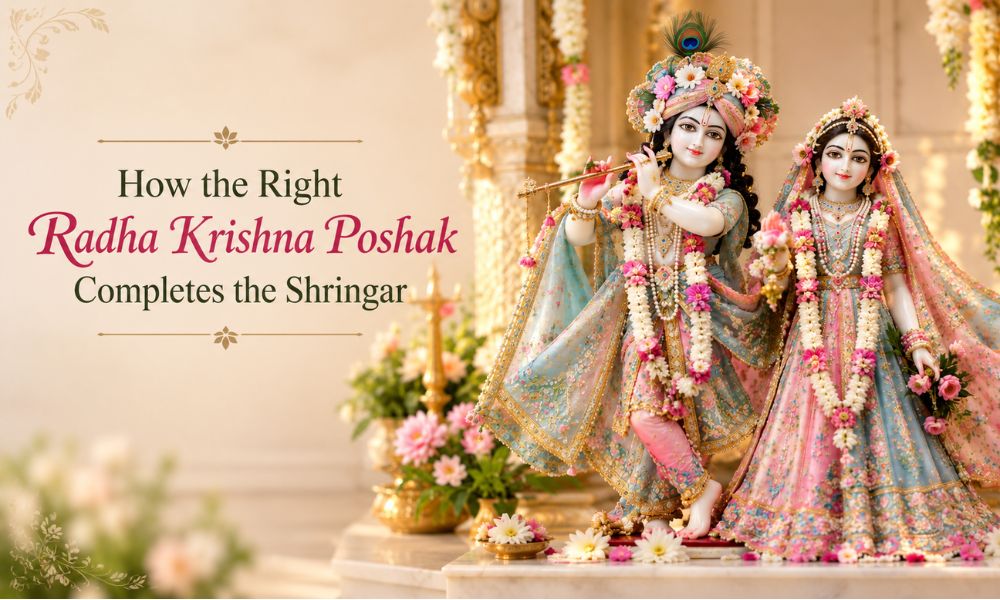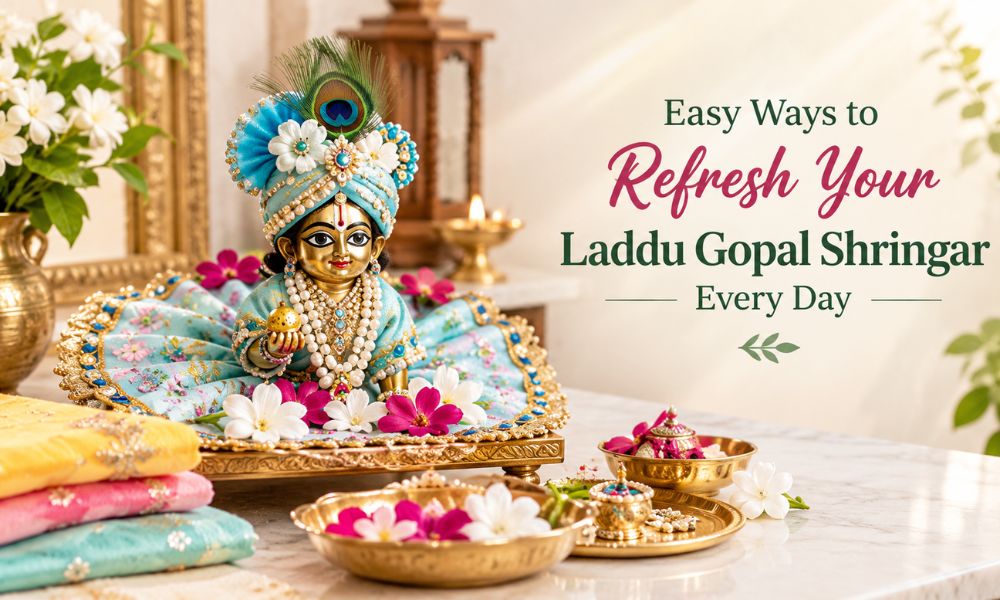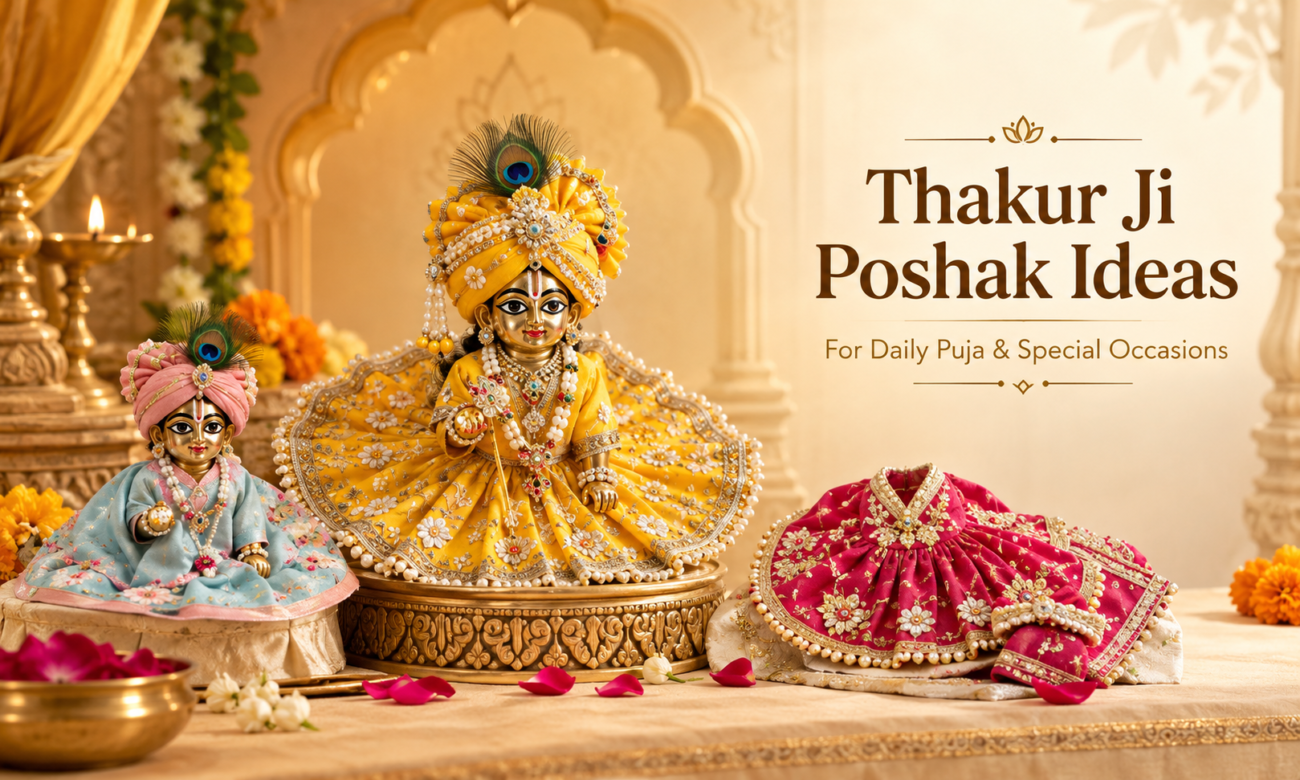
For many families, dressing Thakur Ji is more than a daily ritual. It is a way to express love, devotion, and care through small details. Choosing a fresh poshak, arranging the shringar, and preparing the mandir can make the morning puja feel peaceful and special. On festivals and family celebrations, selecting a different outfit adds even more joy to the occasion.
With so many colours, fabrics, and designs available, finding the right dress can sometimes be confusing. A simple outfit may be perfect for everyday worship, while a richly decorated poshak may suit Janmashtami or another important celebration.
The best approach is to choose clothes according to the season, the idol’s size, and the type of occasion. Here are some practical Thakur Ji poshak ideas to help you create a beautiful and well-coordinated collection.
1. Everyday Poshak Ideas for Morning Puja
Daily worship does not require an elaborate outfit. Simple, well-stitched dresses can look beautiful while making the dressing routine easier to manage.
Cotton poshak is a useful option for everyday wear because it is generally lightweight and easy to clean. You can keep a selection of basic colours, such as cream, pale yellow, light green, and baby pink, for regular use.
Small prints and narrow borders can add charm without making the outfit look too decorative. Solid-colour dresses are another good choice if you prefer a clean, traditional appearance.
It is helpful to keep several everyday dresses ready. This allows you to change Thakur Ji’s outfit regularly without having to wash the same dress repeatedly. Always make sure the fabric is clean and completely dry before using or storing it.
2. White and Pastel Poshak for a Peaceful Look
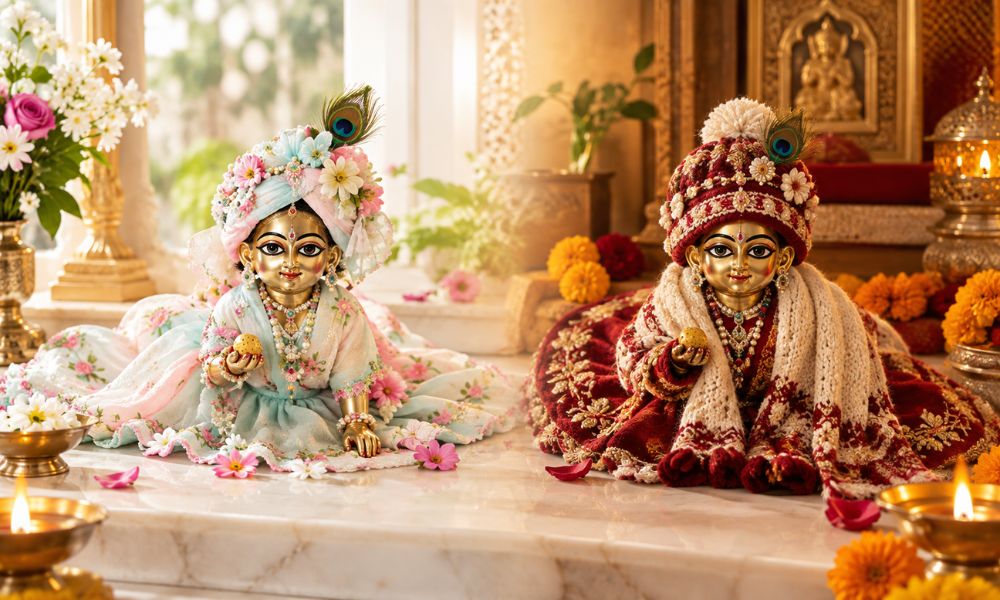
If you prefer a simple and graceful mandir arrangement, white and pastel-coloured poshak designs are worth considering. These shades create a soft appearance and work well for regular worship.
White outfits with delicate golden borders can look traditional without being overly decorative. Light pink, peach, mint green, and lavender are suitable alternatives for those who enjoy gentle colours.
You can pair a pastel dress with a small mukut or a simple mala. Keeping the accessories minimal allows the colour and design of the poshak to remain the main focus.
These outfits are also useful when you want a dress that can be coordinated with different shringar pieces already available in your collection.
3. Traditional Red and Golden Poshak for Celebrations
Red and gold make a striking combination for special puja days and family celebrations. A red poshak with a golden border or subtle embroidery can give Thakur Ji a festive appearance without requiring too many additional decorations.
Maroon, wine, and deep pink are also attractive options for devotees who prefer richer shades. You can choose a design with zari work, small embroidered motifs, or decorative edging.
When selecting a heavily decorated dress, pay attention to the placement of the embellishments. The design should complement the idol’s size rather than overwhelm it.
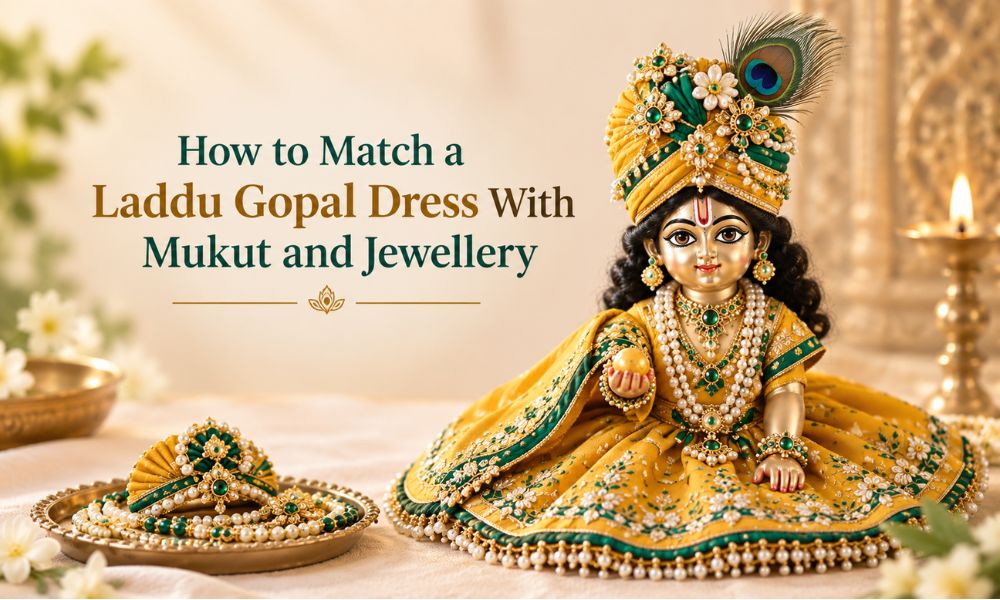
A matching mukut and mala can complete the arrangement. If the outfit already contains detailed embroidery, choose simpler accessories to maintain a balanced look.
4. Floral and Printed Dresses for a Colourful Collection
Floral poshak designs offer a different style from traditional solid-colour outfits. Small flowers, leafy patterns, and colourful prints can make the dress look cheerful and distinctive.
These designs are suitable for daily worship, casual family gatherings, and occasions when you want something attractive but not too elaborate.
For a coordinated appearance, choose accessories in one of the colours featured in the print. For example, a dress with pink flowers can be paired with a matching pink or cream accessory.
Before purchasing, check the print quality and fabric finishing. A well-made dress should have neat seams and should not feel rough around the edges. Smaller prints often work particularly well for smaller idols because they maintain the right visual proportion.
5. Janmashtami Poshak Ideas for Laddu Gopal
Janmashtami is an important celebration for Krishna devotees, and many households prepare a special outfit for Laddu Gopal. The occasion often includes mandir decoration, bhog preparation, devotional singing, and a beautifully arranged jhula.
For a festive outfit, consider peacock blue, bright yellow, emerald green, or a combination of red and gold. Designs featuring peacock feathers, traditional embroidery, and decorative borders can create a distinctive appearance.
You can also choose a layered poshak with a matching mukut and a small bansuri. If you plan to decorate a jhula, select a dress that allows the idol to sit comfortably without the fabric becoming caught in the swing.
Prepare the complete outfit beforehand, including the accessories. Checking the fit in advance can help you avoid last-minute adjustments on the festival day.
6. Lightweight Poshak for Summer Months
Hot weather makes lightweight clothing a practical choice for regular dressing. Cotton and other breathable materials can be easier to handle during the summer months than thick, heavily layered fabrics.
Choose colours such as sky blue, lemon yellow, white, and pale green for a fresh seasonal look. Simple printed designs or outfits with minimal embroidery are generally easier to maintain.
Check whether the dress has a thick lining or multiple fabric layers before ordering. Product photographs may not always show how heavy the material feels.
It is also useful to keep a few extra summer outfits available. This gives you more flexibility when maintaining your daily puja routine and helps prevent frequent washing of a single dress.
7. Velvet and Rich Fabrics for Winter
During winter, you may prefer poshak designs made with thicker fabrics or velvet-style materials. These outfits can have a rich appearance and are often available in deep shades such as navy blue, burgundy, purple, and dark green.
Golden threadwork, embroidered flowers, and decorative borders can make a winter outfit suitable for special worship days and festive gatherings.
You can coordinate the poshak with a matching shawl or suitable traditional accessories. However, the fabric should remain easy to arrange around the idol.
Check the quality of the lining, stitching, and decorative elements before buying. Store these outfits carefully in a dry place to help protect their colour and embroidery.
8. Select Poshak According to Your Idol’s Size
The size of the idol should be one of your first considerations when shopping for Thakur Ji poshak. A design that looks beautiful in a photograph may not fit your Laddu Gopal properly.
Measure your idol using the method recommended by the seller. Some sellers list sizes according to idol height, while others may provide dress measurements, so confirm what the numbers represent.
Before placing an order, check the following details:
- The correct size for your idol.
- The length and width of the poshak.
- The fabric’s flexibility and overall fit.
- The fastening style and ease of dressing.
- The seller’s exchange policy and product information.
A properly fitted outfit is easier to arrange and looks more balanced when paired with a mukut, mala, or other shringar items.
9. Match Shringar Accessories with the Poshak
Accessories can change the overall appearance of a poshak, even when you reuse the same dress. The important thing is to select pieces that complement the outfit’s colour and design.
A mukut adds a traditional finishing touch, while a mala can coordinate with the neckline. A small bansuri, kundal, or waistband may also suit particular outfits.
For special occasions, a decorative singhasan or jhula can help complete the mandir arrangement. Choose accessories according to the size of the idol and the amount of decoration already present on the dress.
You do not need to buy an entirely new set for every occasion. A few versatile accessories can be combined with several outfits, giving you more styling options while keeping your collection manageable.
When exploring different poshak designs, fabrics, and devotional accessories, Gopal Gallery is one option to consider for finding items that suit your mandir and personal preferences.
10. How to Care for Thakur Ji Poshak
Proper care helps keep your poshak collection in good condition for longer. Everyday cotton dresses and heavily decorated festive outfits may require different cleaning methods, so follow the instructions provided with each garment.
Wash delicate dresses gently when the fabric allows it. Avoid harsh detergents that may affect colours, embroidery, or decorative borders. Outfits with zari, sequins, or attached ornaments may need more careful handling.
Once the dress is clean, let it dry completely before storing it. Keep outfits in separate pouches or compartments to prevent embroidery from catching on other fabrics.
You can organise your collection by colour, season, or occasion. Keeping festival outfits separate from everyday dresses makes it easier to find the right design when needed.
11. Important Things to Check When Shopping Online
Online shopping makes it easier to compare different poshak designs, but checking product details is essential before ordering.
Read the fabric description and confirm the exact size. Check whether the listing includes only the dress or also contains the accessories shown in the product photograph.
Look for clear information about delivery, returns, and exchanges. Reviews and customer photographs, when available, can provide additional insight into the actual product.
Compare the quality and suitability of different options rather than choosing based on decoration alone. A reasonably priced outfit with neat stitching and the correct fit can be a more practical purchase than an elaborate dress with unclear measurements.
Final Thoughts
Choosing Thakur Ji poshak becomes easier when you consider how and when each outfit will be used. Simple cotton dresses are suitable for everyday puja, floral prints add variety, and embroidered or velvet-style designs can bring a festive touch to special celebrations.
Build your collection gradually with different colours, fabrics, and styles. Pay attention to sizing, maintain the outfits properly, and choose accessories that complement rather than overpower the dress.
Whether you are preparing for Janmashtami or selecting an outfit for your regular morning puja, a thoughtfully chosen poshak can make your mandir arrangement feel personal, graceful, and meaningful.